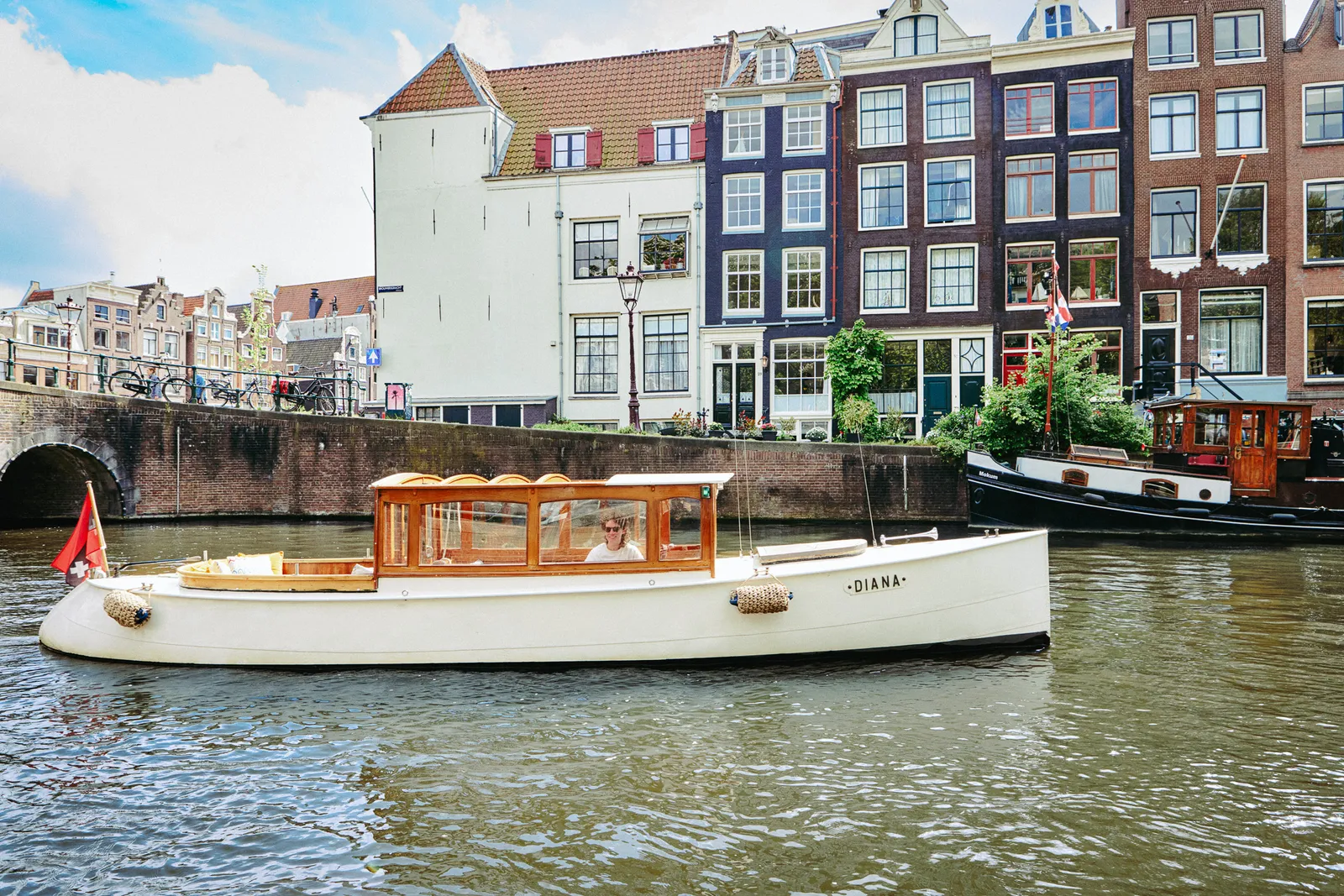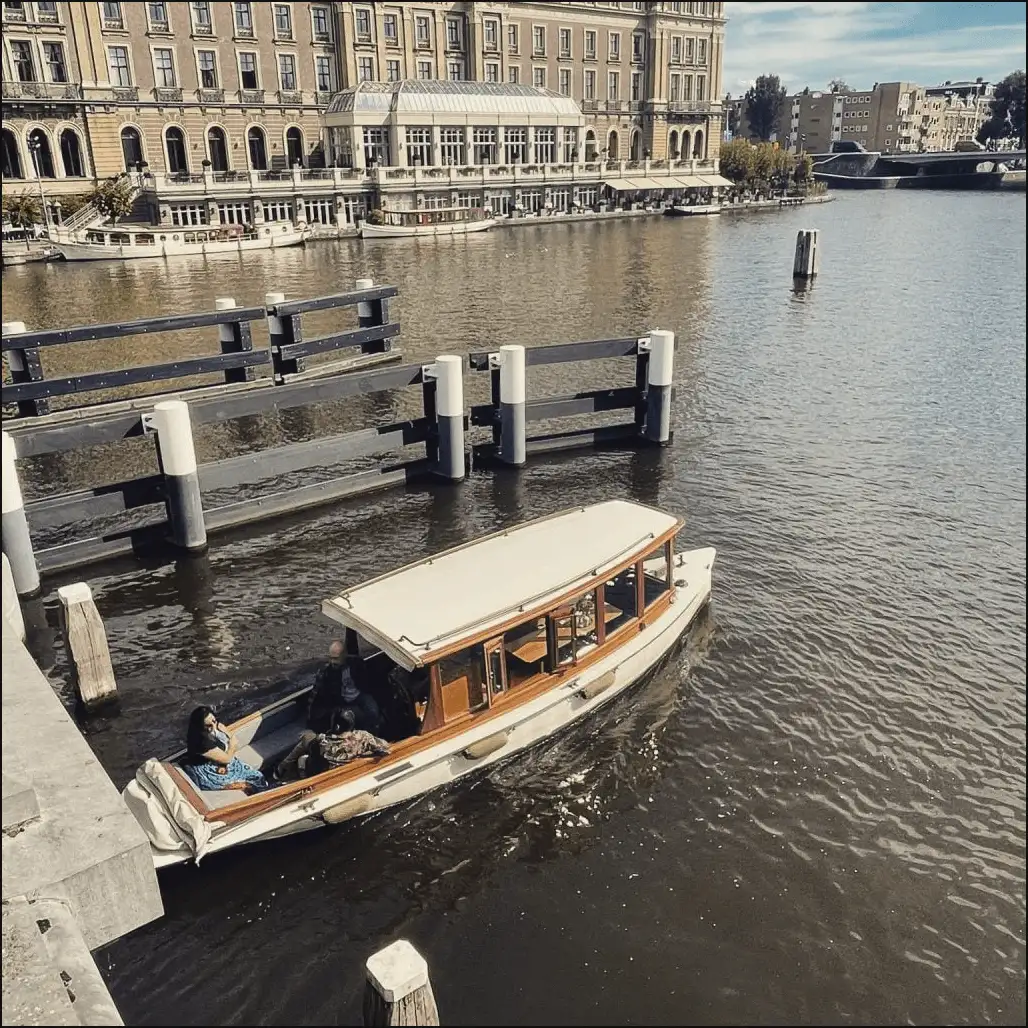
The ring canals were laid out wide: the Keizersgracht measures 100 Amsterdam feet, about 28 metres, from quay to quay, which is why the houses opposite shade only the lower floors at first.
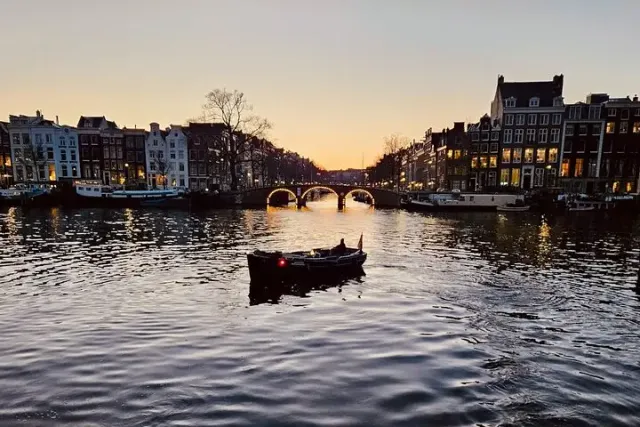
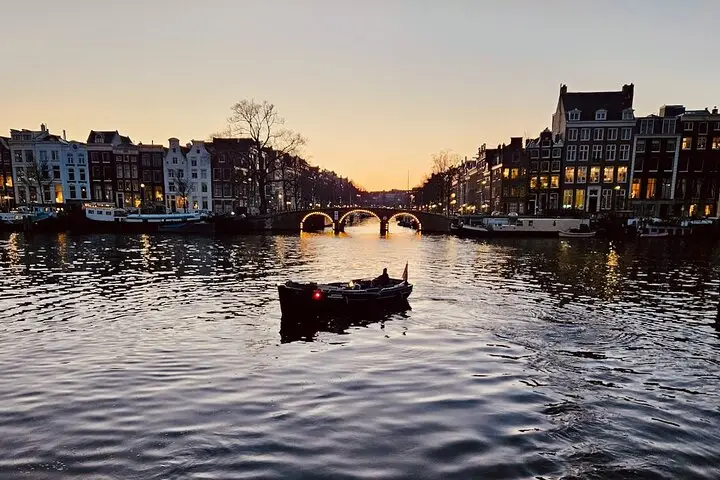
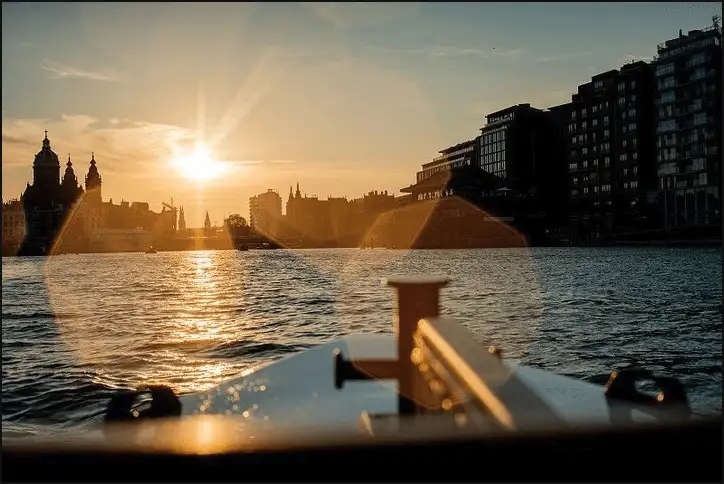
Some of the canals on the postcards never line up. Reguliersgracht and the northern Singel run north to south, so the sun doesn't set down either of them, and at the Magere Brug the Amstel leaves the sunset off to one side: go for the bridge, not for the sun.
Late October and February belong to the Jordaan, where Bloemgracht and Egelantiersgracht point west-south-west, toward the sunset in those weeks; Egelantiersgracht takes its angle from old polder drainage ditches rather than from the ring plan. Leidsegracht and Looiersgracht tilt a few degrees further south and take November and January. These four work best on foot: stand on a bridge at the east end of whichever one matches your month and look west along the water.
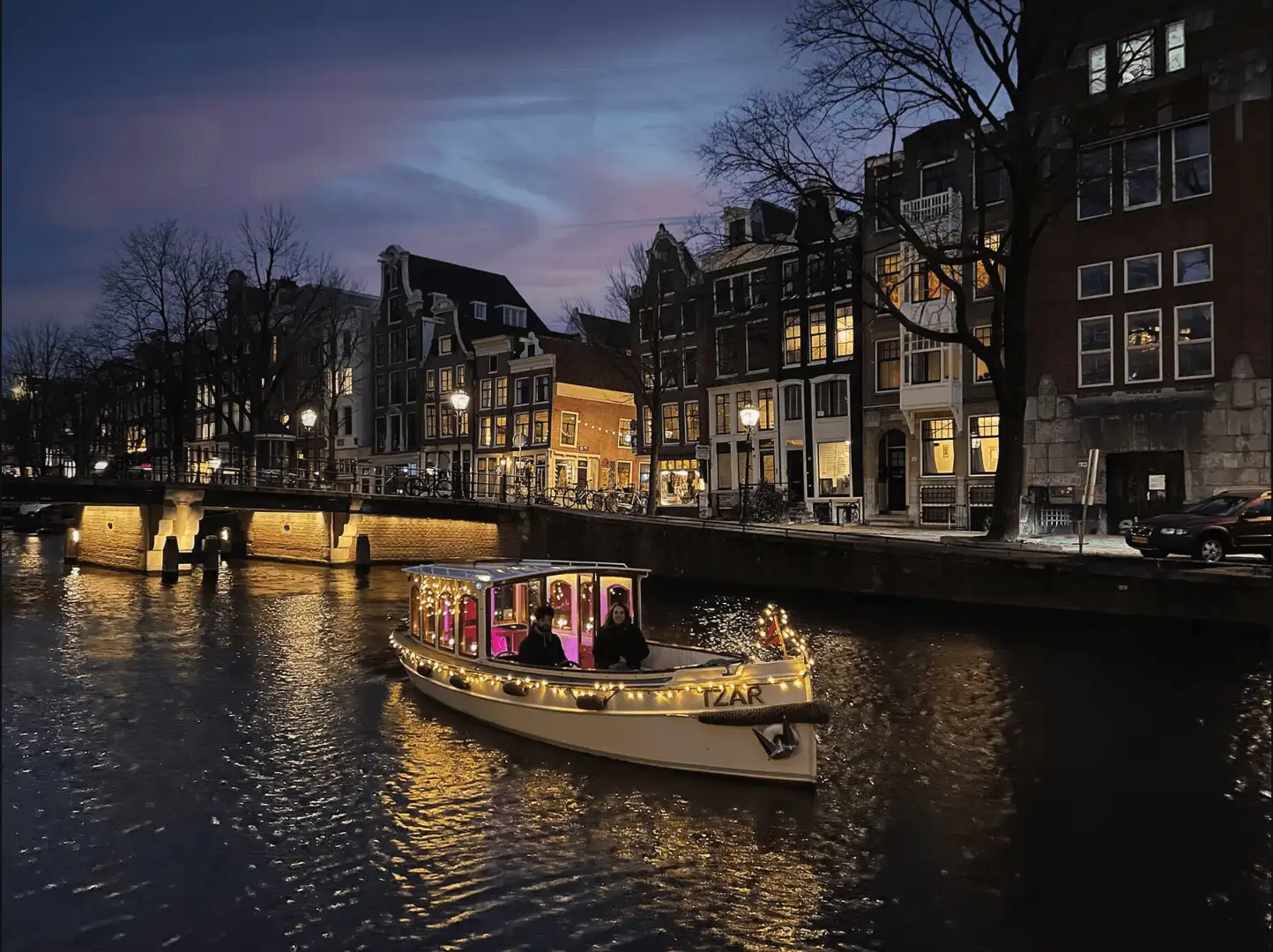
A boat earns its place in those months on the main ring instead. On the western arc the ring canals run roughly north-north-west, which turns the houses on their east bank to face west-south-west, so in October, November, January and February the low sun lands on their fronts rather than shining down the water. The stretches to watch are the east banks of the Herengracht, the canal the 1613 ring plan gave to the richest merchants, and the Prinsengracht. Timing matters here, because the houses on the opposite bank shade the lower floors first, so the lit band climbs the fronts as the sun drops and leaves the gables well before official sunset. If your route takes in the western ring, be there early, or watch from the quay opposite.