Comparisons & Decisions
Amsterdam Light Festival: Open Boat vs. Covered Boat (The Winter Warmth Reality)
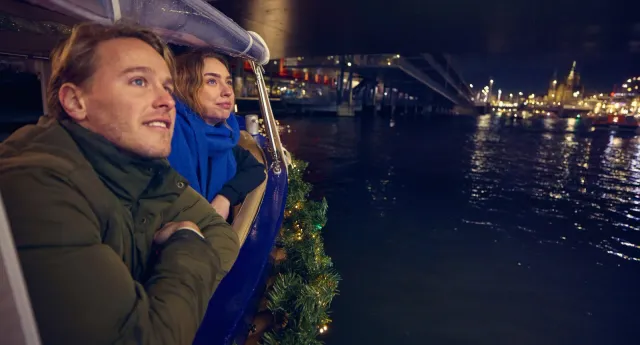
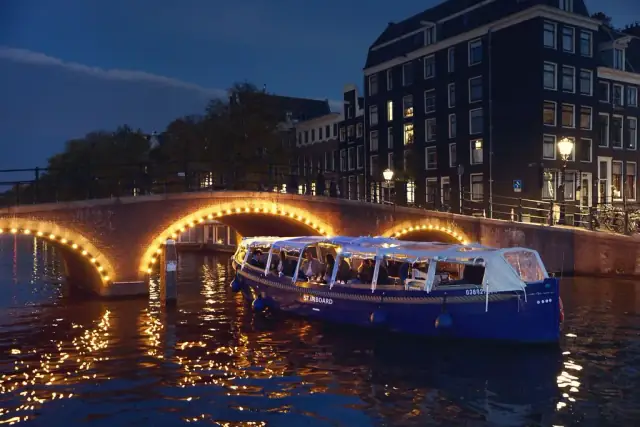
Most visitors planning an Amsterdam Light Festival cruise assume an enclosed glass boat is the warmest, safest choice, and that an open boat means shivering for 75 minutes in 3°C canal air. On the water, the reality is the exact opposite. Large 80-to-100-passenger tour boats trap warm, humid breath against single-pane glass cooled by canal water, fogging the windows within fifteen minutes and turning illuminated art into blurry smears. Open electric sloops solve winter warmth through conductive seat heating and heavy fleece blankets, warming your body directly while keeping your view of the sculptures completely unobstructed. Here is the physical reality of winter warmth across Amsterdam's fleet, and how to choose the right deck for your night.
Which Boat Deck Fits Your Evening?
Festival boats fall into four distinct deck designs. Tap your priority below to jump directly to verified departures and real-time pricing:
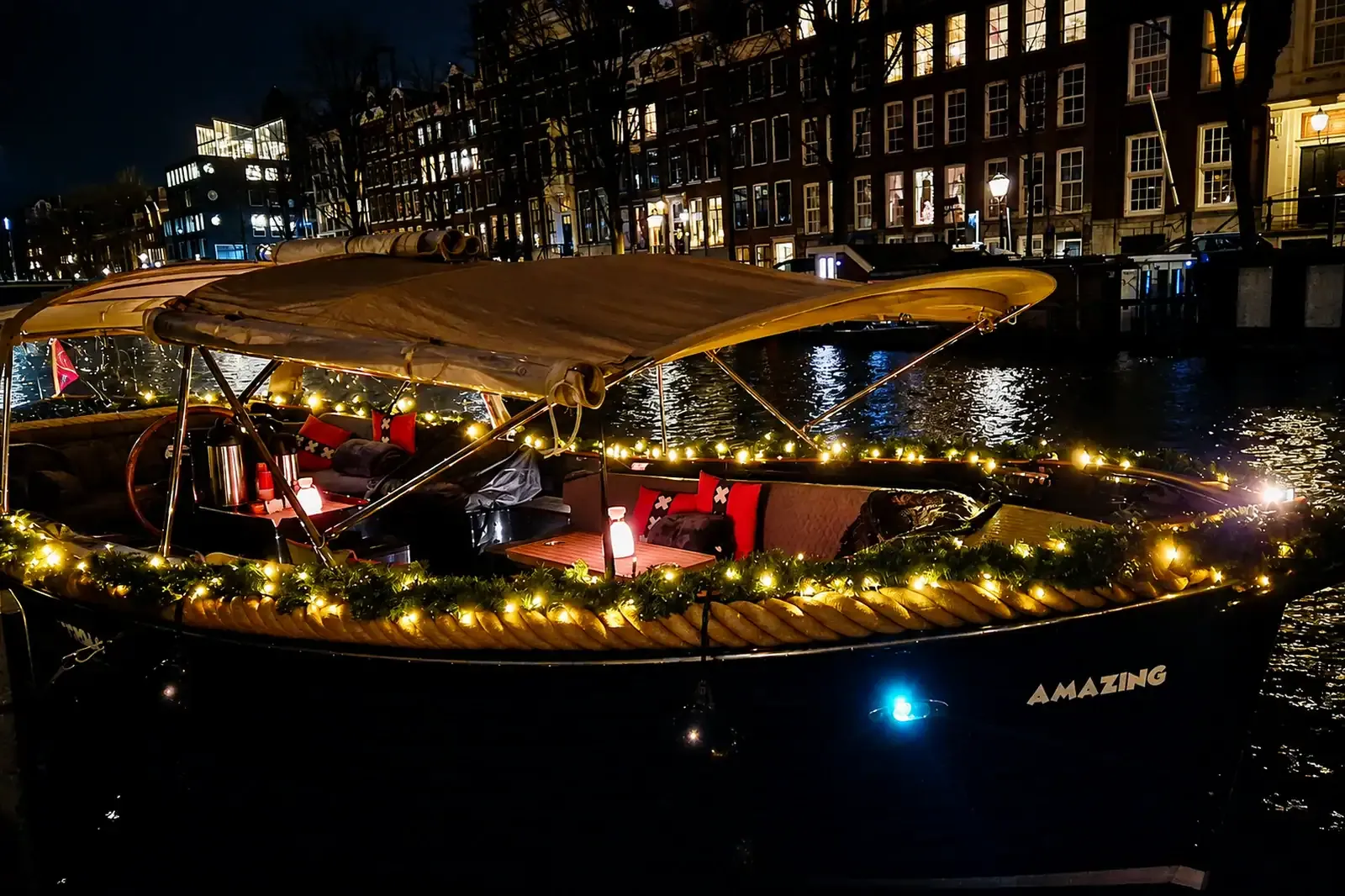
Open Sloop
Heated Seats & Blankets
- 360° upward sightlines, 0% window glare
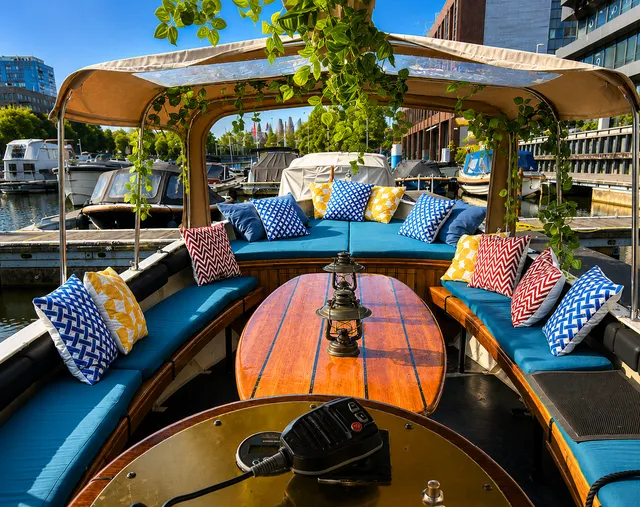
- Conductive heated cushions + warm Glühwein
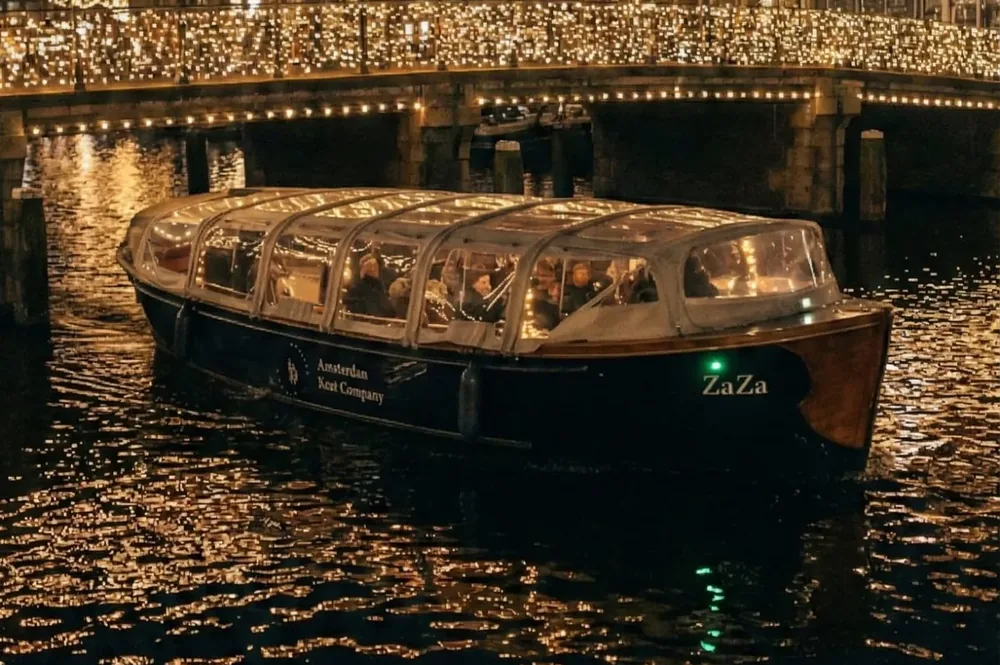
Covered Heated Boat
Enclosed Cabin & Toilet
- Forced-air heating & demisted windows
- Onboard marine toilet • Central Station dock
Covered Panoramic
Glass Roof & Warm Treats
- Glass-roof ceiling visibility out of the wind
- Fleece blankets + warm stroopwafel & cocoa
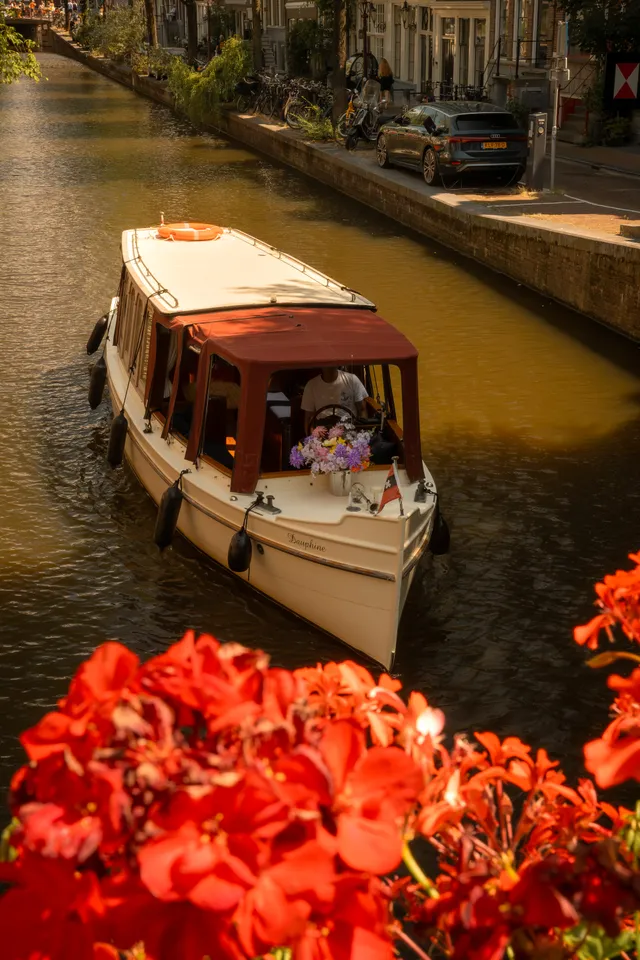
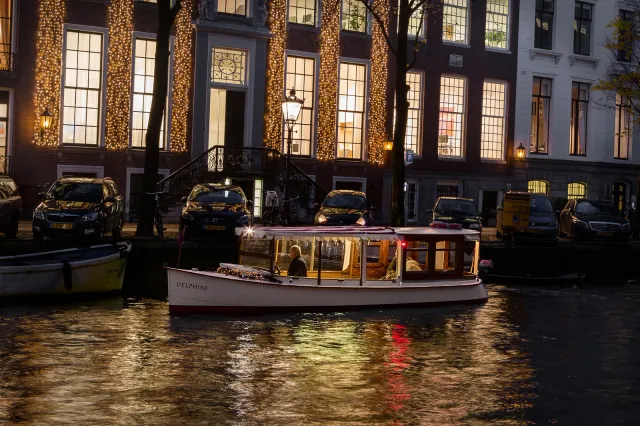
Historic Salon Boat
Living-Room Radiators
- Real radiators, varnished wood & bar
- Intimate 8–12 guests • Shared or Private
Operational Decision Logic for Amsterdam Light Festival Boats
This decision framework maps real-time weather conditions, group size, physical comfort priorities, and amenity requirements to verified boat deck types operating during the Amsterdam Light Festival.
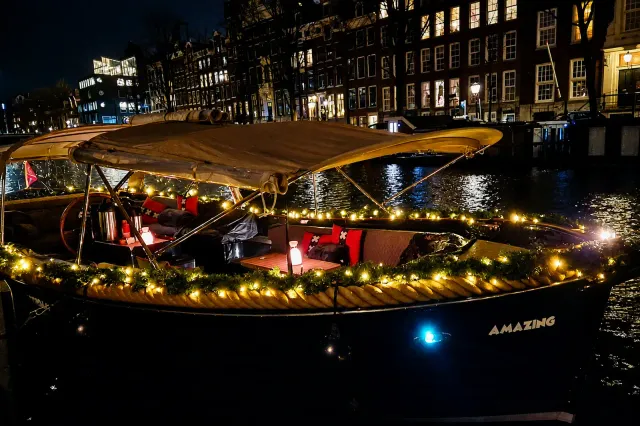
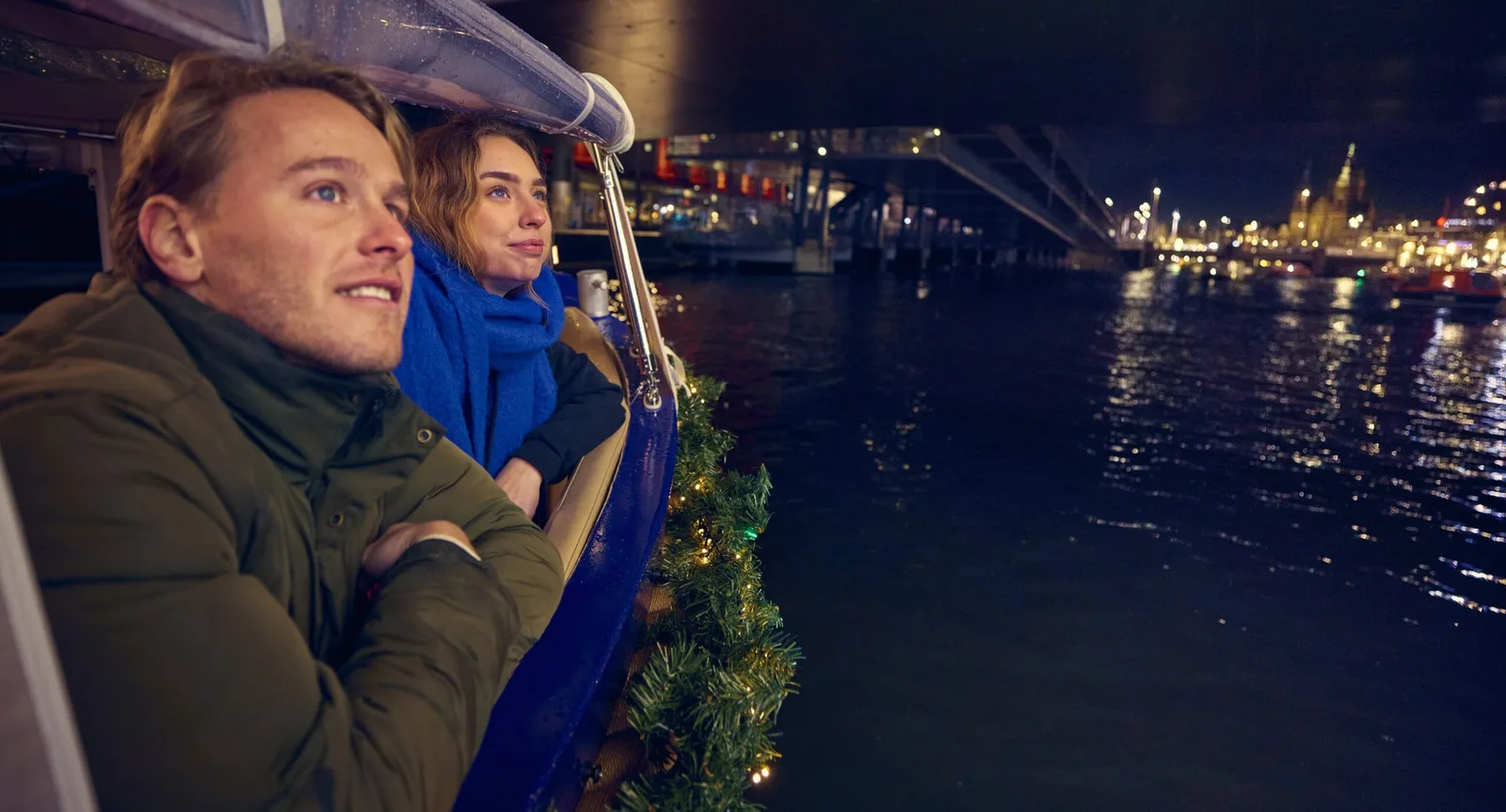
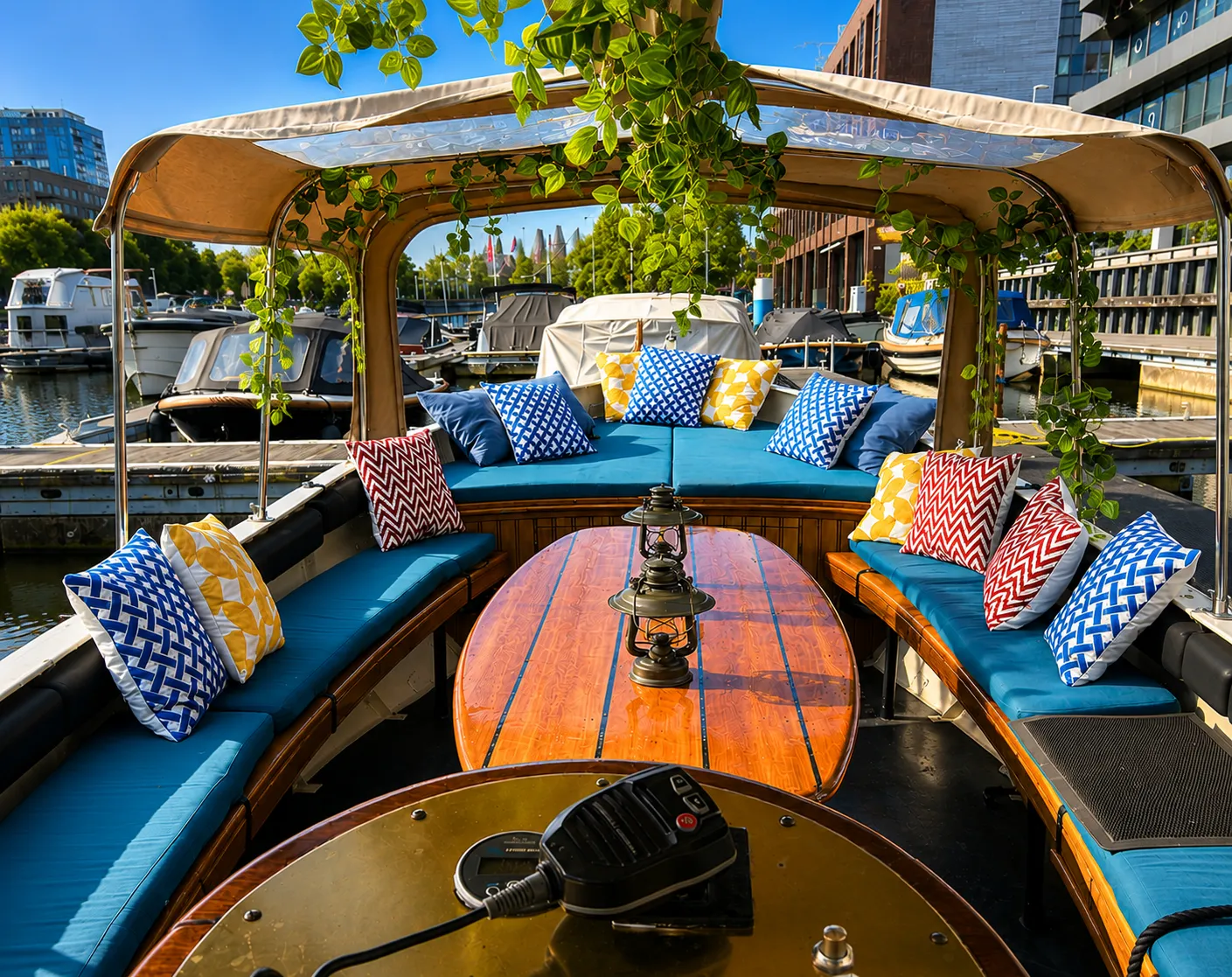
- Rule 1 (Photography & Art Sightlines): IF your primary goal is crystal-clear photography or unobstructed upward sightlines under bridge arches, THEN choose an Open Electric Sloop with Heated Seats. Zero glass means zero window condensation, zero lighting reflections, and 360-degree art visibility.
- Rule 2 (Crisp Dry Winter Nights at 0°C–4°C): IF the forecast is dry and cold, THEN choose an Open Electric Sloop with Heated Cushions. Conductive seat heating warms your core directly from below, heavy fleece blankets insulate your legs, and hot Glühwein keeps you comfortable throughout the 75 minutes.
- Rule 3 (Rain, Sleet, or Changeable Weather): IF rain, sleet, or changeable weather is expected, THEN choose either a Convertible Sloop or a Covered Heated Boat. Open sloops close transparent canopies before boarding in unsettled weather, while covered boats offer full cabins and heating.
- Rule 4 (Central Station Boarding with Onboard Restroom): IF you want a covered, heated boat departing directly from Central Station with an onboard toilet, THEN choose the Covered Heated Boat with Restroom. It provides a heated cabin and private marine toilet right at Stationsplein.
- Rule 5 (Glass-Roof Sightlines with Warm Treats):IF you prefer a covered panoramic boat with hot drinks and snacks, THEN choose the Covered Panoramic Boat with Hot Chocolate & Stroopwafel.
- Rule 6 (Cold-Sensitive Travelers, Toddlers, or Seniors): IF traveling with guests sensitive to cold air, THEN choose a Historic Heated Salon Boat. An enclosed, radiator-warmed salon cabin with an onboard restroom provides home-like warmth for small groups (max 8–12).
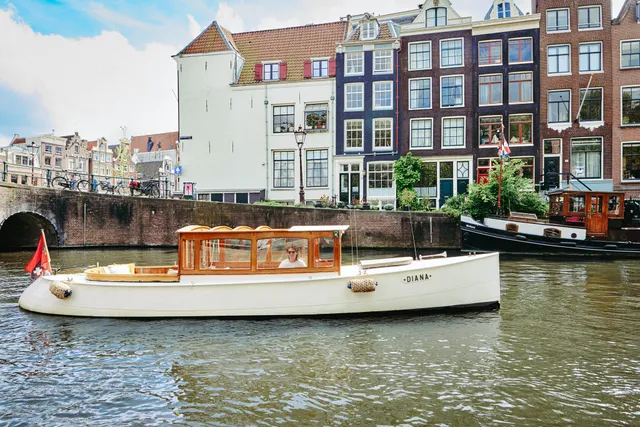
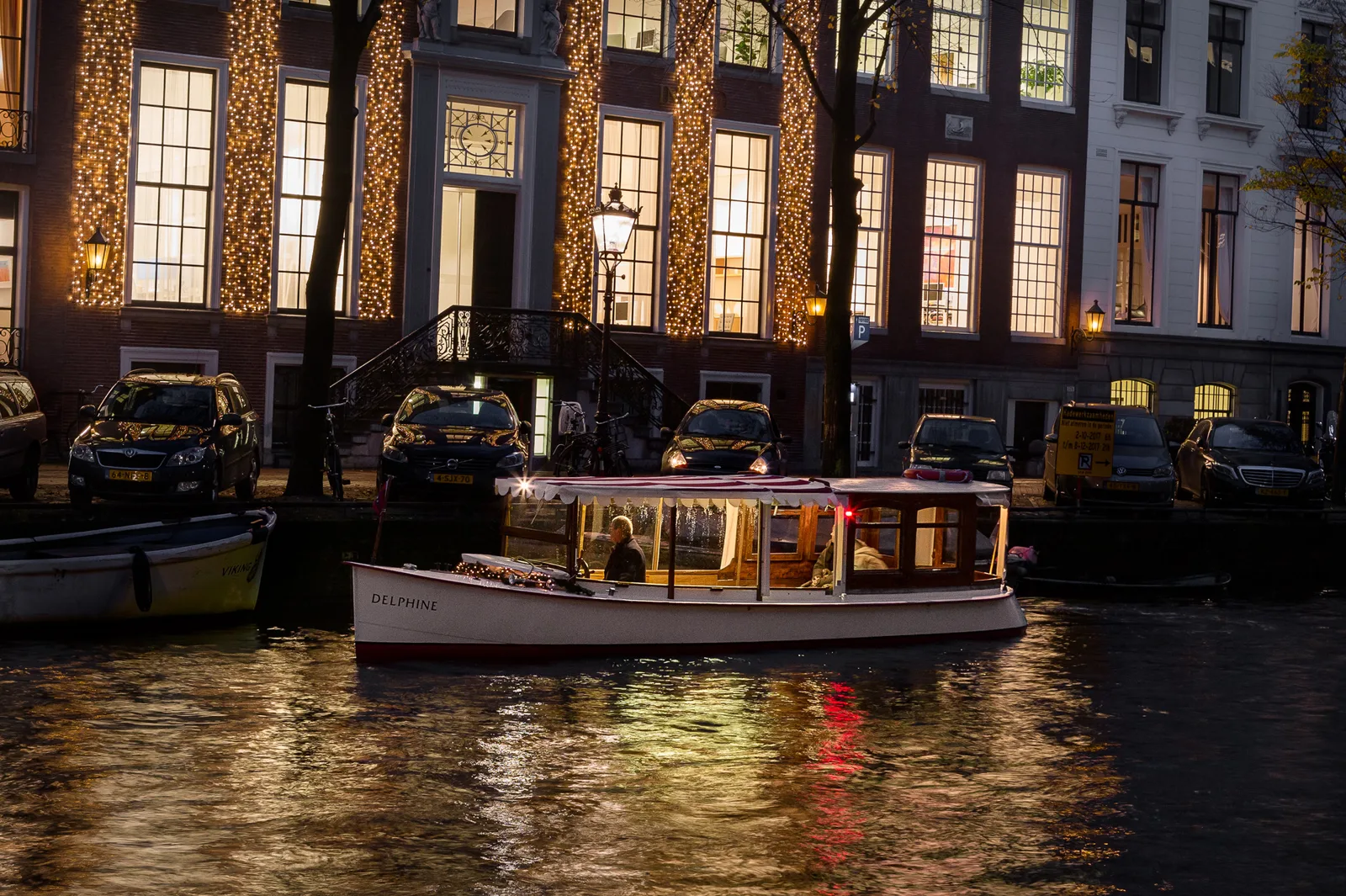
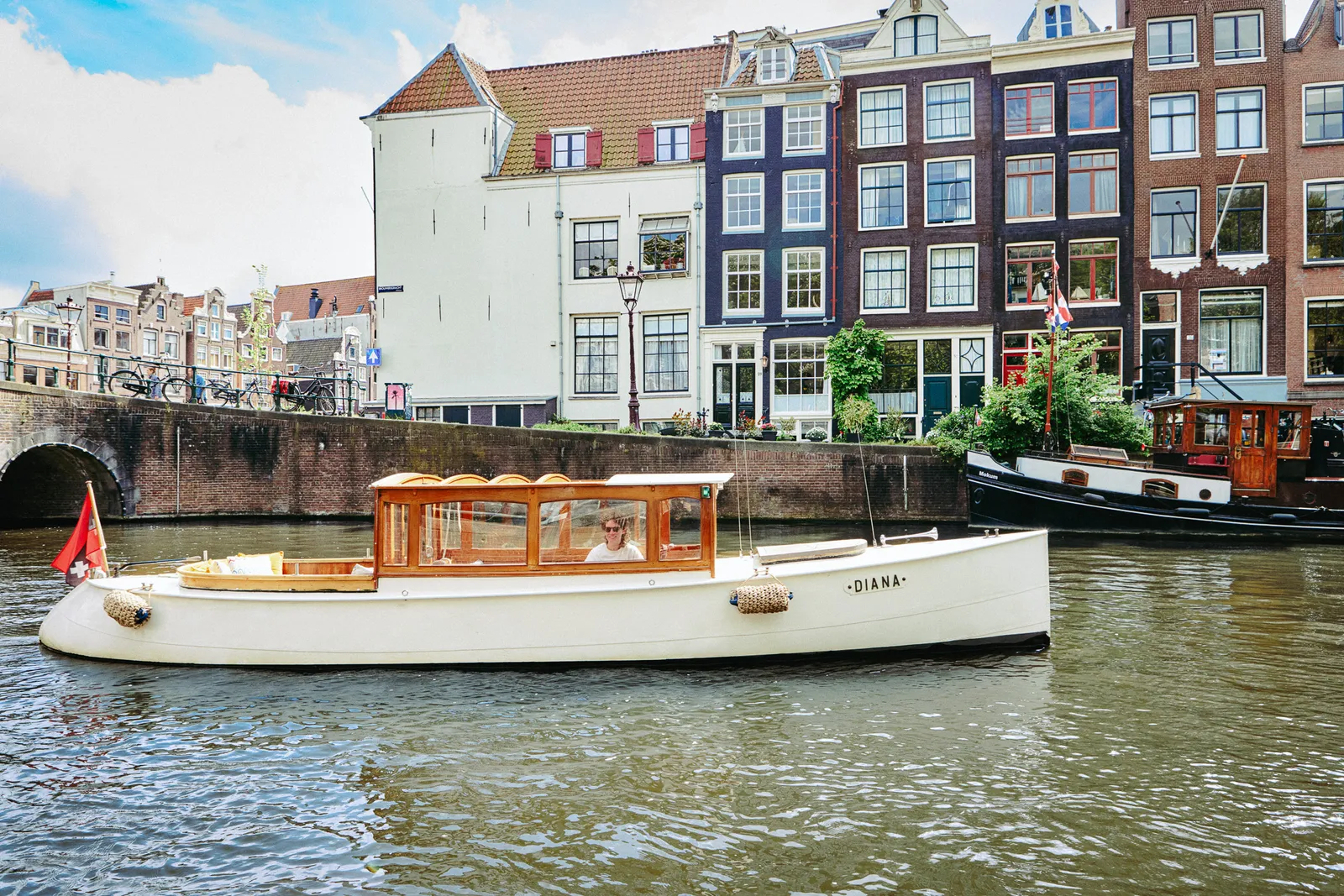
- Rule 7 (Private Groups of 6 to 12 People): IF you are traveling with 6 to 12 people, THEN charter a Private Historic Salon Boat, specifically Salon Boat Diana, Curaçao, or Salon Boat Delphine.
The Winter Condensation Trap: Why Big Covered Boats Fog Up
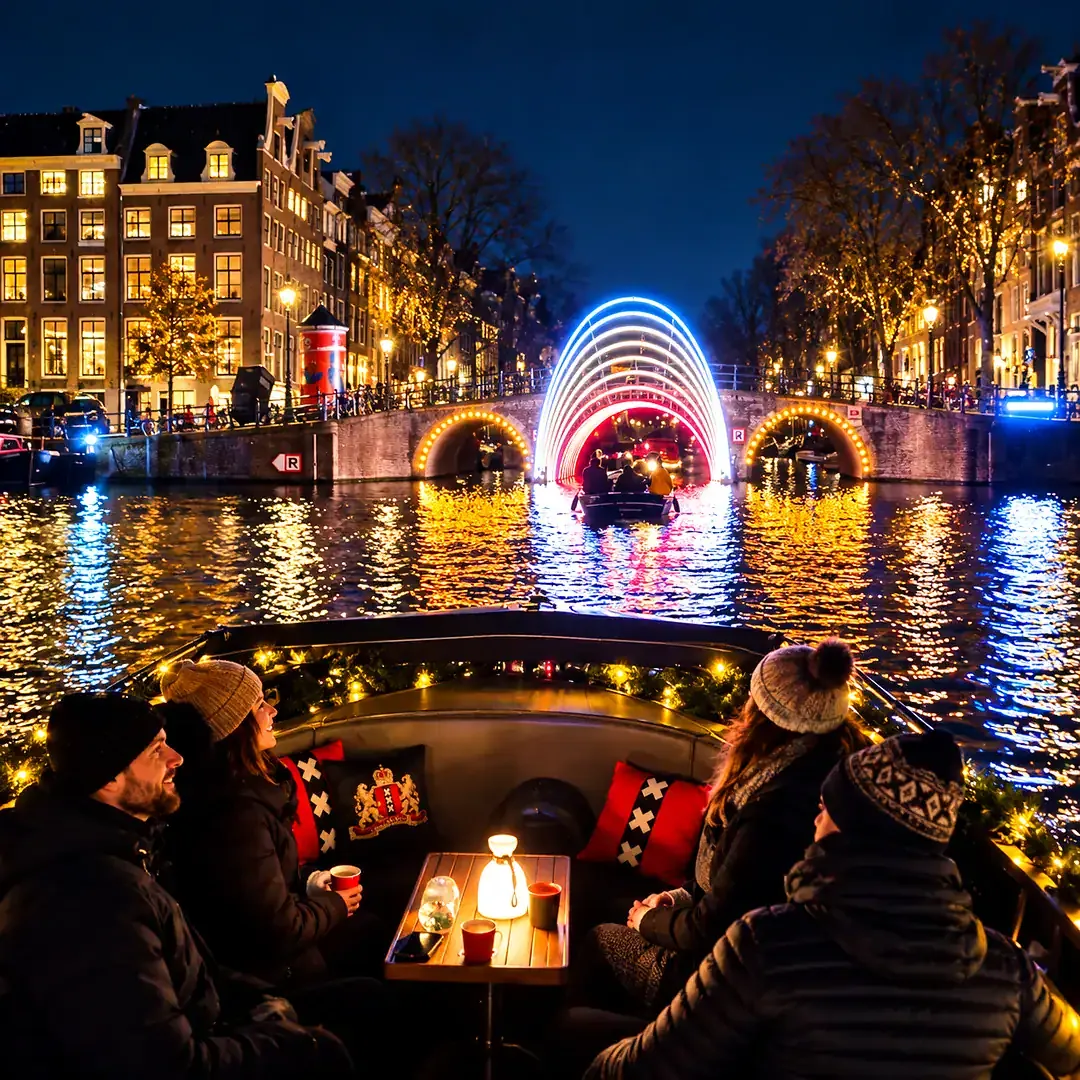
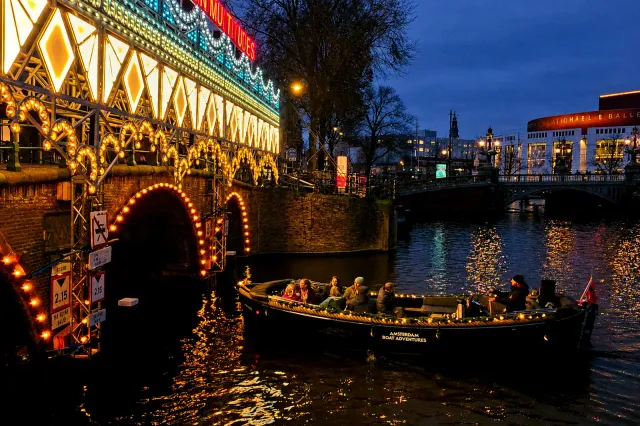
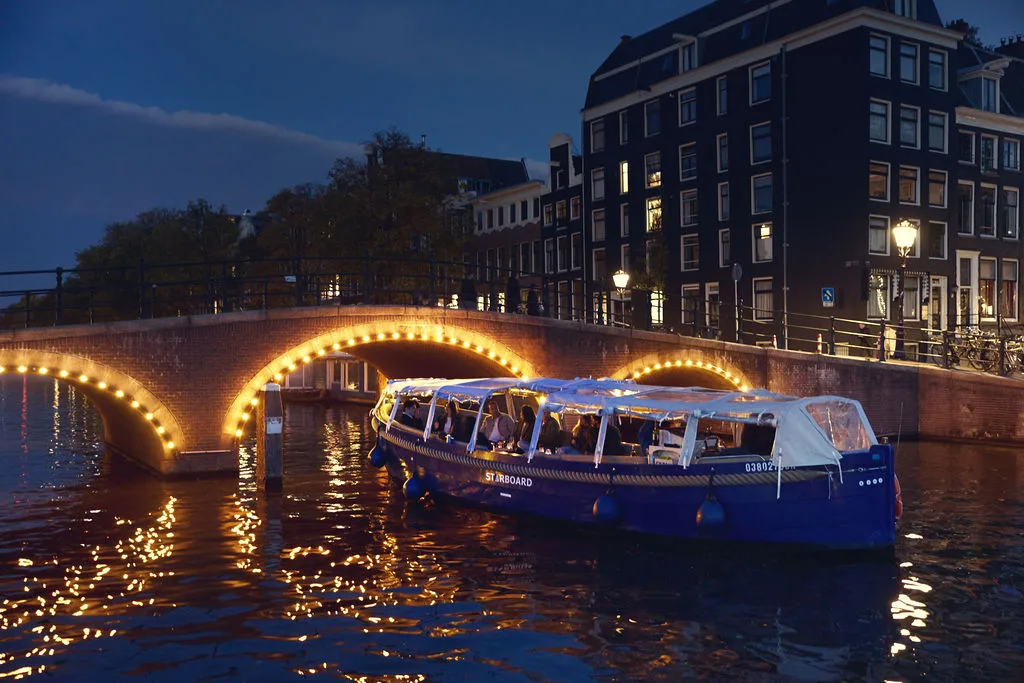
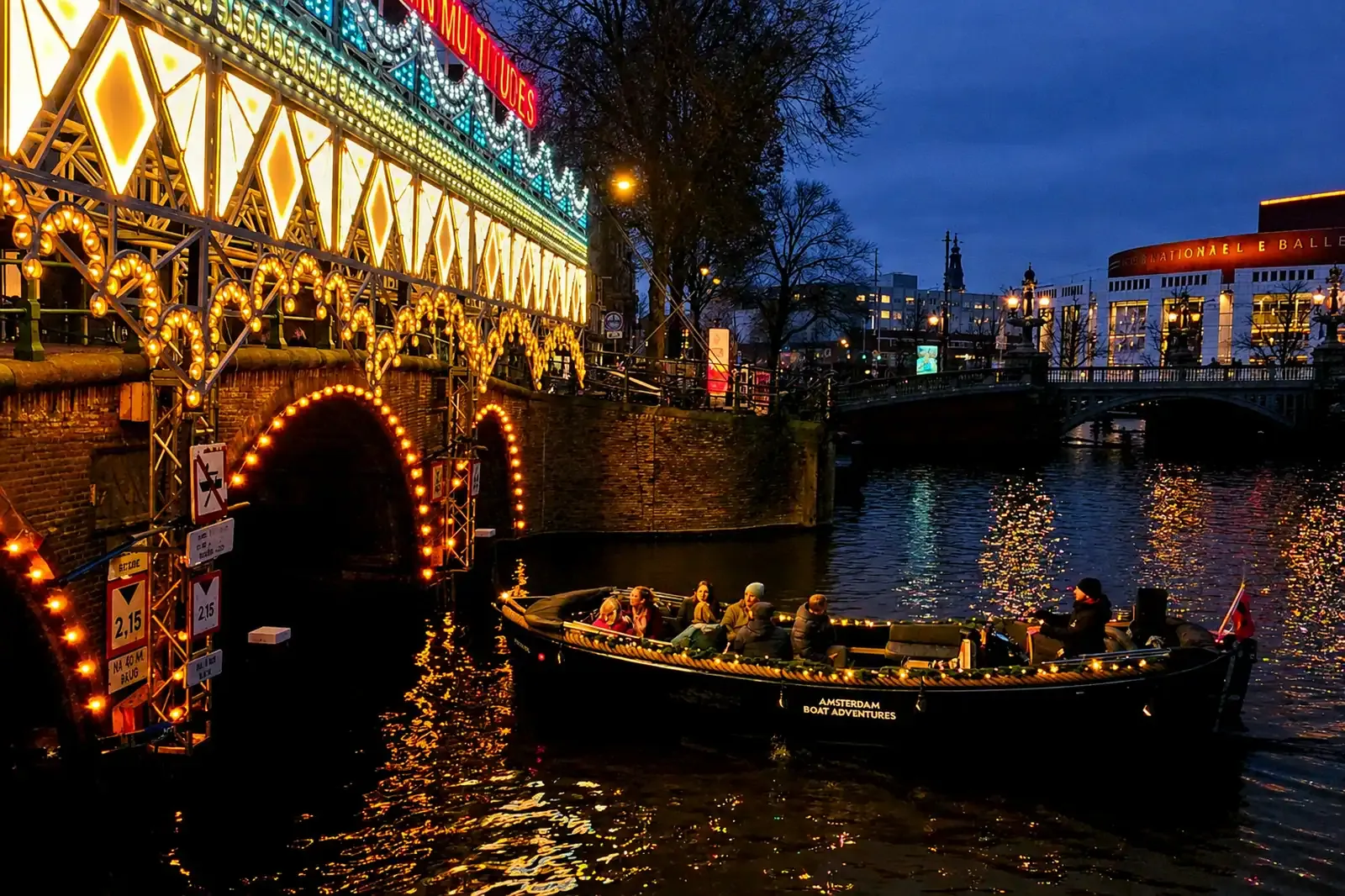
Light sculptures installed under stone bridge arches can only be viewed without roof glass cutting off the upper crown.
When winter evening temperatures hover between 1°C and 5°C along Amsterdam's waterways, booking an enclosed glass tour boat sounds logical: stay indoors, escape the damp breeze, and look at the illuminated sculptures in comfort. The catch is winter thermal physics.
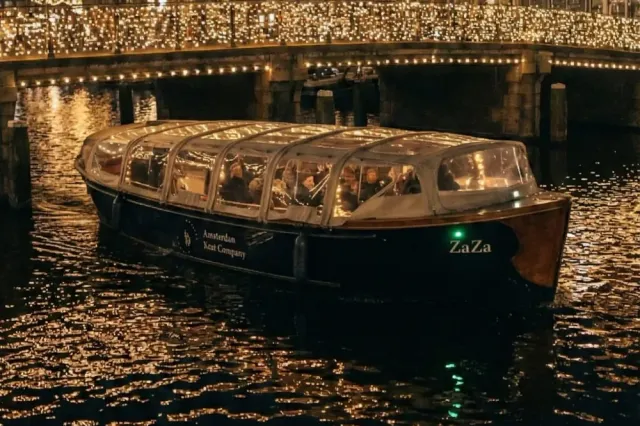
On a standard commercial tour boat carrying 80 to 100 passengers, guests board wearing damp winter coats and breathing warm air into a sealed cabin. Each person exhales roughly 40 milliliters of water vapor per hour. As that interior humidity builds up, it collides with single-pane glass panels chilled on the outside by 3°C canal water. The glass drops below the dew point, and heavy condensation forms within ten to fifteen minutes.
Wiping the glass with gloves or paper napkins leaves greasy streaks. More frustratingly, interior cabin lights reflect off the curved acrylic ceiling panels, producing double reflections that make photographing or even seeing waterborne installations nearly impossible. When visitors post disappointed reviews saying the light festival felt underwhelming or blurry, they are almost always reporting the optical failure of an overcrowded, fogged-up glass cabin rather than the art itself.