Comparisons & Decisions
Amsterdam Light Festival: Open Boat vs. Covered Boat (The Winter Warmth Reality)
Every winter, travelers booking canal cruises for the Amsterdam Light Festival face the exact same anxiety: will an open boat be freezing cold in 3°C canal air, or does a covered boat guarantee a comfortable evening? Online forums like Reddit tell a surprising story. The most common complaint from visitors does not come from travelers who braved an open boat, but from those who booked commercial glass-topped cruisers to stay warm—only to spend 75 minutes staring through fogged-up windows coated in condensation from 80 passengers breathing in a sealed cabin. Across BoatLocal's live fleet, winter cruising is engineered differently. Here is the physical reality of winter warmth on open sloops with heated cushions versus covered salon boats, and how to choose the right deck for your night.
The Winter Condensation Trap: Why Big Covered Boats Fog Up

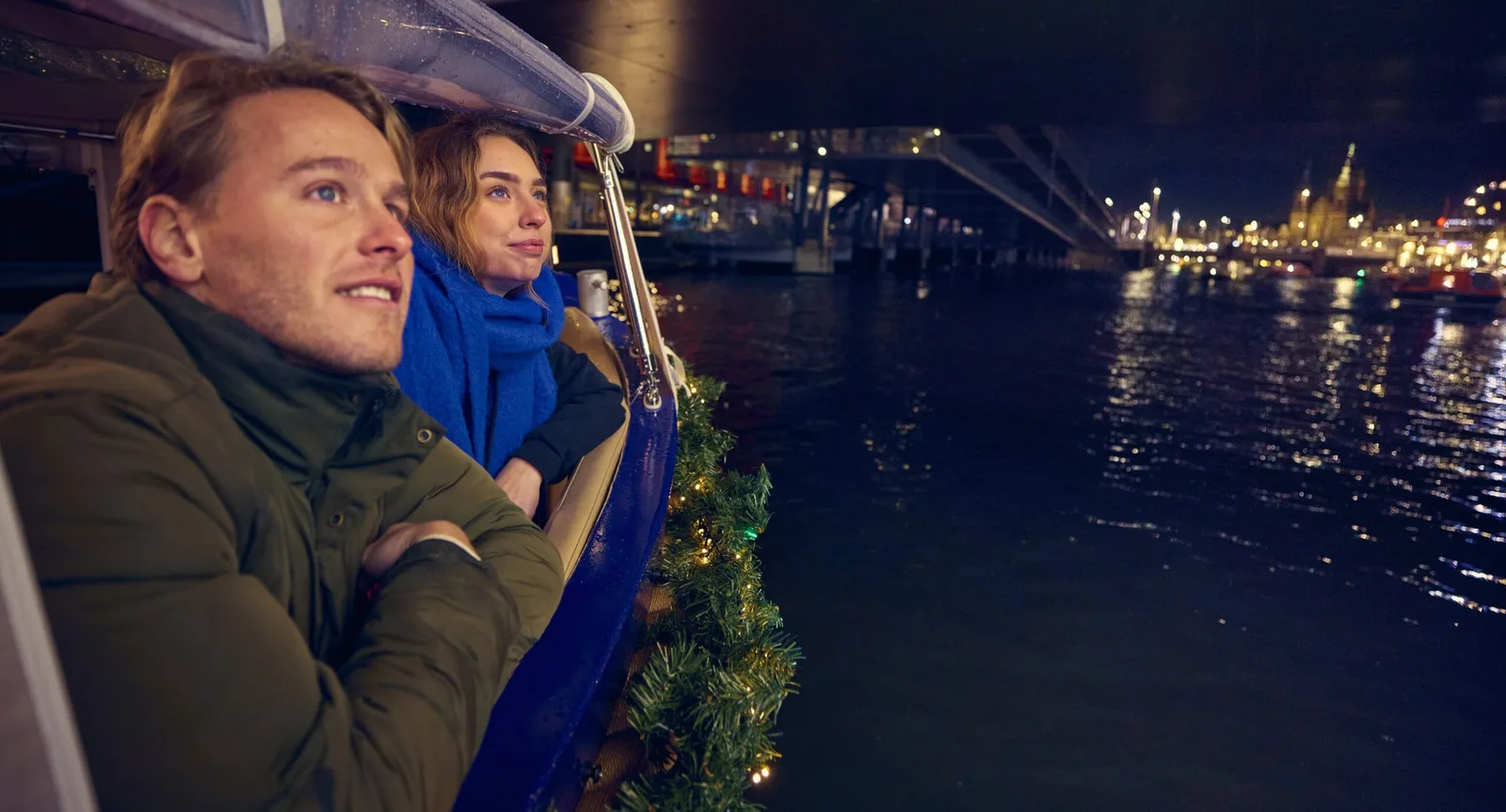
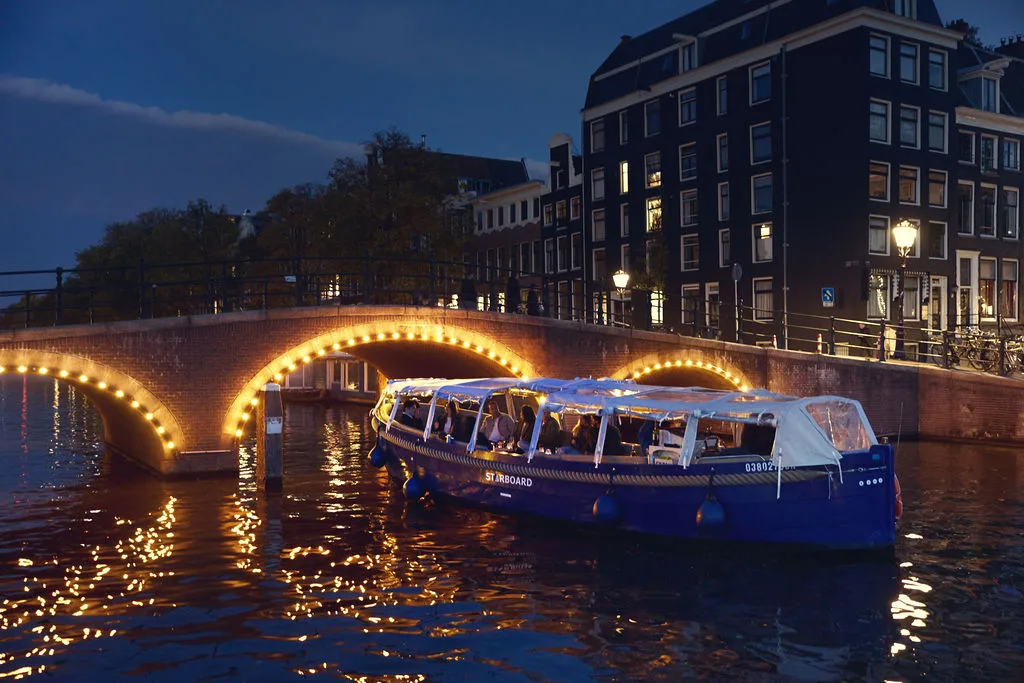
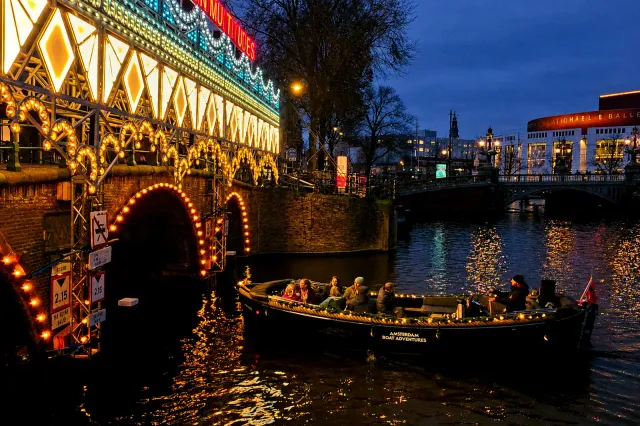
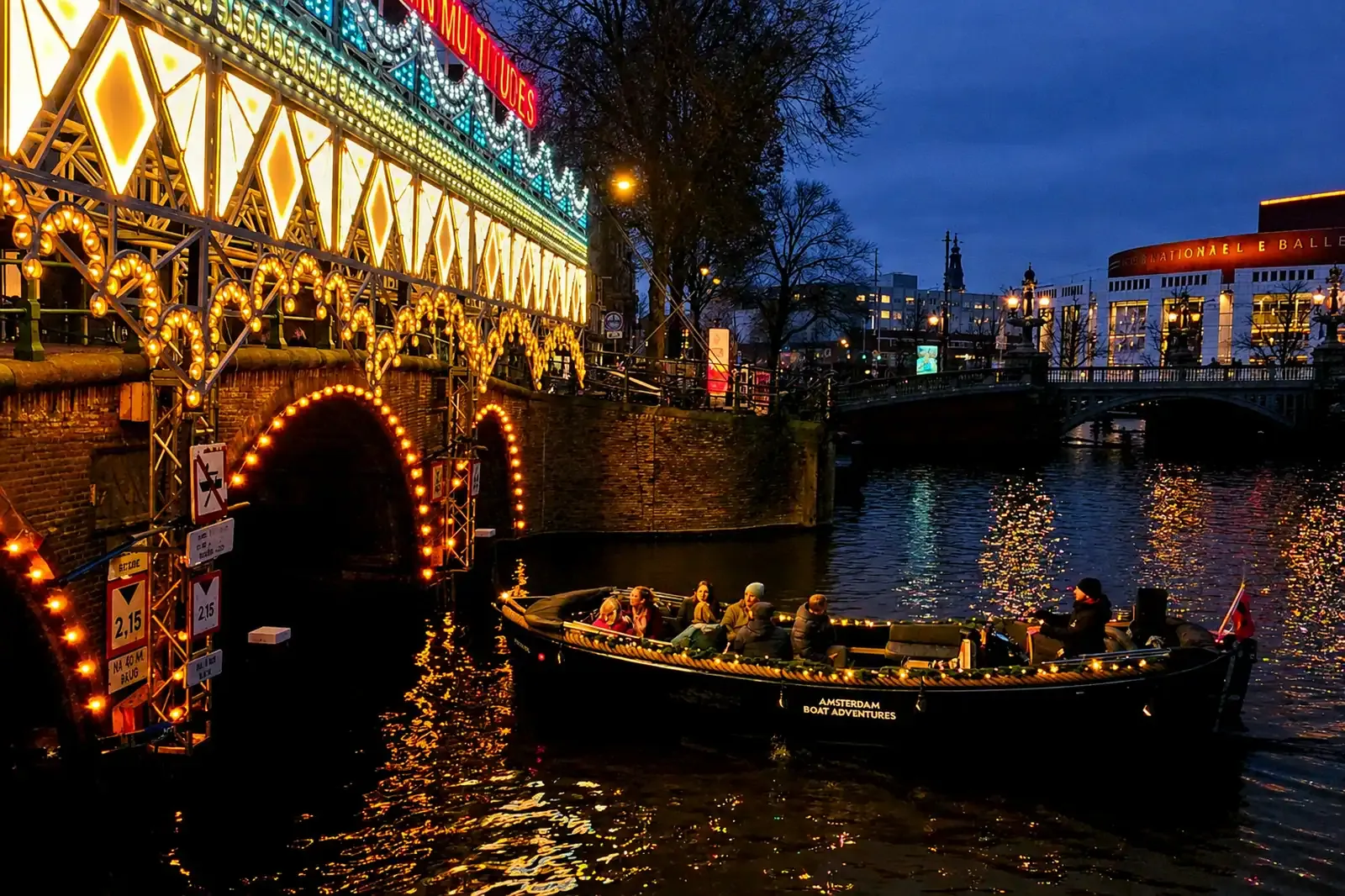
Looking straight up at light installations reflecting under stone bridge arches requires unobstructed waterline sightlines.
When travelers see evening temperatures forecast between 1°C and 5°C along the canals, the instinctive choice is to book an enclosed boat with glass windows and a roof. It sounds sensible: stay indoors, out of the wind, and watch the illuminated sculptures in warmth.
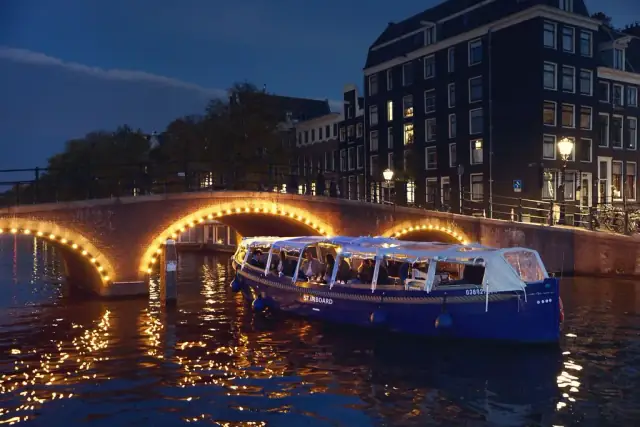
The problem is winter thermal physics. On a standard commercial 80-to-100-passenger glass canal boat, dozens of people board wearing damp winter coats and breathing warm air (37°C) into a sealed cabin. As soon as that warm interior humidity meets single-pane glass panels cooled by 3°C canal water on the outside, condensation forms within ten to fifteen minutes. Passengers spend the cruise rubbing glass with woolen mittens and paper napkins, only to produce greasy smears. Worse still, interior cabin ceiling lights reflect against the curved acrylic windows, creating double reflections that make photographing illuminated artworks nearly impossible.
When visitors leave disappointed reviews saying the light festival felt underwhelming or blurry, they are almost always reporting the optical failure of an overcrowded, fogged-up glass cabin rather than the art itself.