BoatLocal

Neighbourhoods & Routes

Canal Cruise Through the Jordaan, Amsterdam

The Jordaan is Amsterdam's most sought-after neighbourhood for a reason: narrow streets, intimate canals, independent shops, and brown cafés that have barely changed in decades. On the water, the Jordaan canal experience is quieter and more personal than the main ring. Boats must be small to fit the narrower channels. The scenery is houseboats, flower-laden bridges, and the backs of 17th-century workshop buildings. BoatLocal lists several private and small-group boats that specialise in Jordaan routes.

What Makes the Jordaan Canals Different

The Jordaan's canals — Bloemgracht, Egelantiersgracht, Lauriergracht, and Looiersgracht — were built as part of the same 17th-century expansion as the main ring but for a different purpose. While Herengracht was lined with merchant palaces, these narrower channels served the craftsmen, tanners, and artisans who supported the merchant economy.

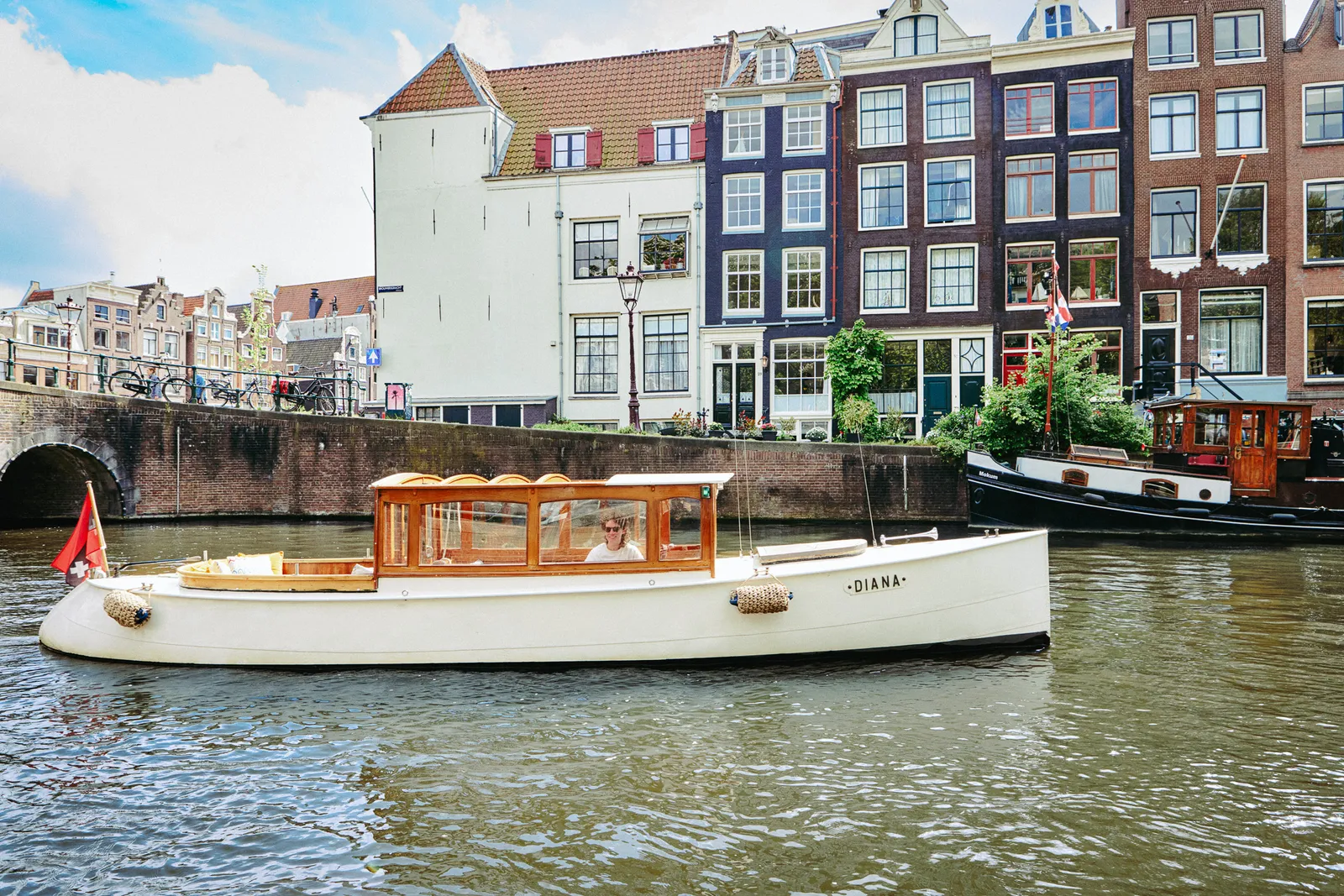
The result is a different architectural texture: smaller façades, more varied gable shapes, and a sense of human scale that the grand ring canals lack. Many of the buildings are now among Amsterdam's most expensive addresses — the Jordaan has gentrified entirely since the 1980s — but the canal widths and bridge heights haven't changed, keeping the character intact.

Highlights Along a Jordaan Canal Route

Bloemgracht (Flower Canal) is often called the "Herengracht of the Jordaan" — three 1642 step-gable houses at numbers 87–91 are the most photographed facades on the smaller canals. Egelantiersgracht is quieter still, lined with houseboats and ending near the Claes Claesz Anslo almshouse. Lauriergracht stretches from the Jordaan south toward the Leidsekade, passing under a series of low iron bridges.

All of these connect back to Prinsengracht, so a Jordaan route typically starts and ends on the main ring, giving you a circuit that contrasts the grand and the intimate.

Boat Size Matters in the Jordaan

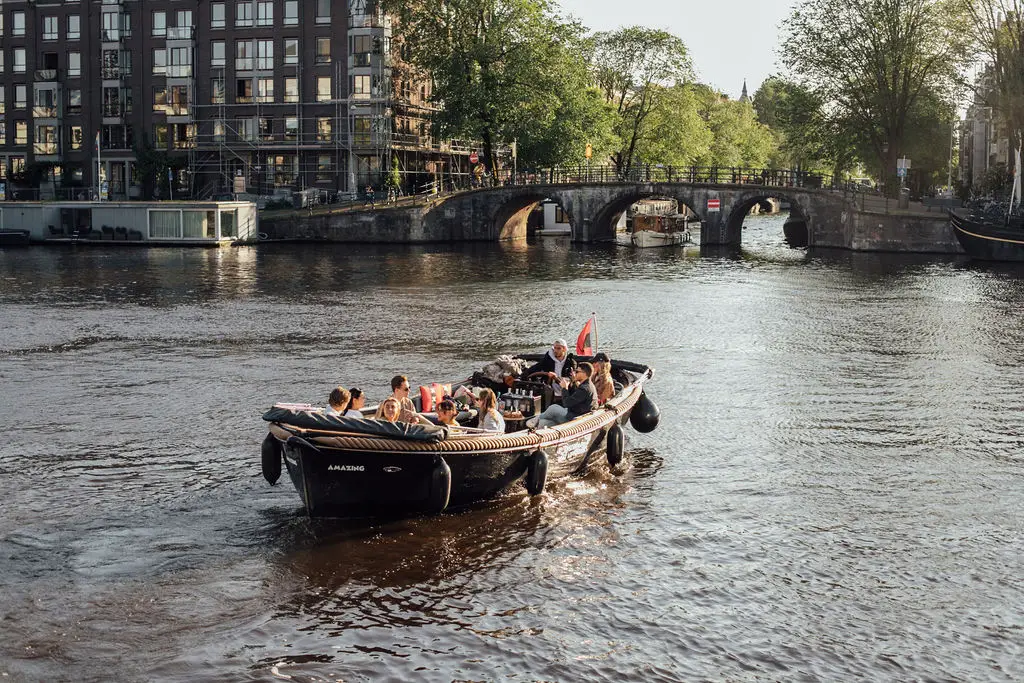
The Jordaan canals are not accessible to large covered saloon boats or party catamarans. You need a small electric open boat (capacity 6–12 people) to navigate them comfortably. This is actually an advantage: the enforced intimacy of a small boat suits the neighbourhood perfectly.

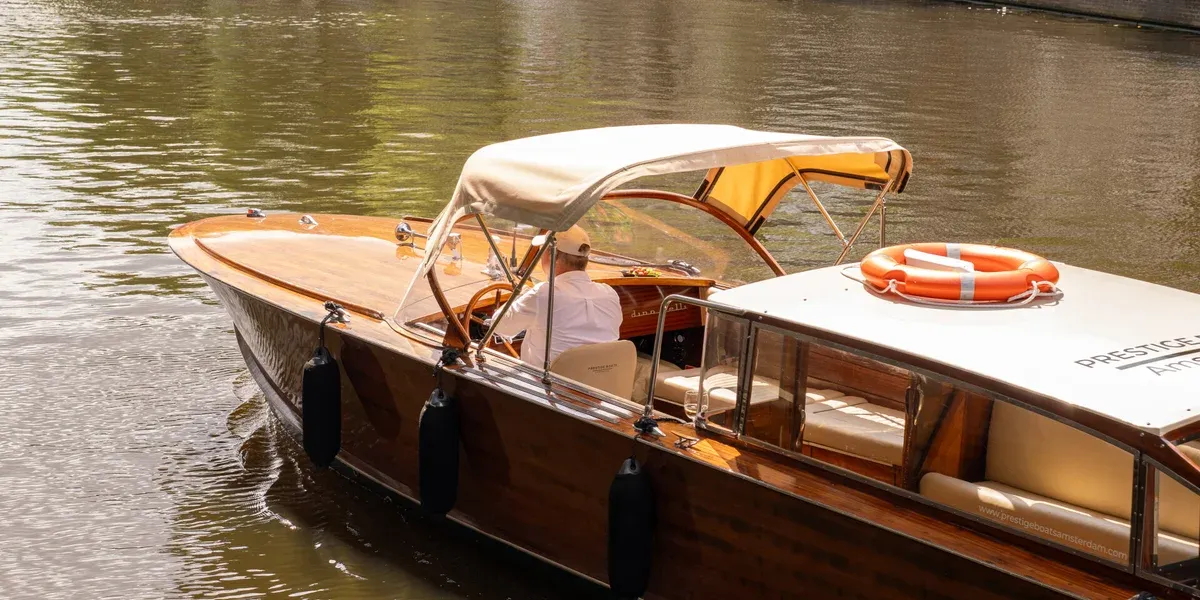
Open boats — without a fixed roof — are the traditional Amsterdam canal vessel. They sit low in the water, move quietly on electric motors, and let you hear the city. A Jordaan cruise on an open boat on a still summer evening, with the smell of linden trees from the gardens behind the canal houses, is one of the definitive Amsterdam experiences.

BoatLocal filters for open boats in the small-group and private categories will show you boats suitable for a Jordaan route.

Ready to book your Amsterdam canal cruise?

Compare 100+ vetted boats from local operators — private and shared.

Browse Canal Cruises

Frequently Asked Questions

Can any boat go through the Jordaan canals?
No. The Jordaan canals are narrower and have lower bridges than the main ring. Only small electric open boats (typically capacity 6–12) can navigate most Jordaan channels. Large covered boats and catamarans are restricted to the main ring and harbour.
How long does a Jordaan canal cruise take?
A dedicated Jordaan circuit takes about 45–60 minutes. Most 2-hour private bookings combine Jordaan canals with a stretch of the main ring for a complete picture of Amsterdam's waterways.
Is the Jordaan good for a quiet, non-party cruise?
Yes — the Jordaan is ideal for romantic cruises, small family groups, or anyone who wants a calm, scenic experience rather than a party atmosphere. The narrow channels naturally limit boat traffic and noise.
What is the best season to cruise the Jordaan?
Late spring (May–June) is exceptional when linden trees bloom along the canals. Summer evenings are long and warm. The Jordaan is also beautiful in autumn, when fallen leaves collect around the houseboats. Winter is quieter but atmospheric, especially during the Amsterdam Light Festival.

Book a Canal Cruise in Amsterdam